Get Hero Discounts on Plumbing Services
Sewer Line Repair in Melrose, FL: What Homeowners Need to Know
A slow drain that never quite clears. A patch of grass that stays soggy no matter the weather. A smell near the yard that shouldn’t be there. These are the kinds of small, easy-to-ignore signals that often point to a much bigger problem underground. When it comes to sewer line repair in Melrose, FL, waiting until the issue becomes an emergency almost always costs homeowners more time, more stress, and more damage to their property.
At Crown Plumbing and Septic, we’ve built our business on showing up, communicating clearly, and giving Melrose homeowners long-term solutions instead of quick fixes that fail again a year later. As a family-owned and family-operated company rooted in a multigenerational plumbing tradition, we understand what’s at stake when a sewer line starts to fail, and we want every customer to feel informed before we ever pick up a tool.
A broken or failing sewer line typically shows up as slow or gurgling drains throughout the house, sewage odors indoors or in the yard, unusually lush or soggy patches of grass, and sometimes standing water or sinkholes near the pipe’s path. If you’re noticing more than one of these signs at the same time, it’s a strong indication the sewer line itself, not just an isolated fixture, needs attention.
Below, we’ll walk through the most common warning signs, how long sewer lines typically last, the difference between trenchless repair methods, and what a collapsed line looks like in a real home. Our goal is to help you understand what’s happening beneath your property so you can make a confident decision about next steps.
What Are the Signs of a Broken Sewer Line?
Sewer line problems rarely announce themselves with a single, obvious symptom. More often, they build gradually, which is why so many homeowners are surprised when a “small” drain issue turns out to be a much larger repair. Some of the most common warning signs include:
- Multiple slow drains at once. A single slow sink is usually a local clog. Slow drainage in several fixtures at the same time, especially toilets, tubs, and sinks on the lowest level of the home, points toward a blockage or damage further down the line.
- Gurgling sounds from toilets or drains. Air trapped in a partially blocked or damaged sewer line often escapes as a gurgling noise when water drains elsewhere in the home.
- Sewage odors indoors or outdoors. A persistent smell near a drain, in the yard, or around a septic and sewer connection point is one of the clearest signs of a compromised line.
- Unusually green or soggy patches of lawn. Leaking wastewater can act as an unwanted fertilizer, creating patches of grass that are noticeably greener, lusher, or wetter than the surrounding yard, even during dry weather.
- Foundation or yard settling. As a damaged pipe leaks, surrounding soil can erode or shift, sometimes leading to visible settling, small sinkholes, or cracks near the pipe’s path.
- Frequent backups after repeated snaking. If a plumber has cleared a clog more than once in the same area, the underlying issue may be a structural problem with the pipe itself rather than a simple blockage.
If any of these sound familiar, a professional sewer video inspection is the most reliable way to confirm what’s happening underground before recommending a repair approach. You can learn more about that process on our sewer video inspection page.
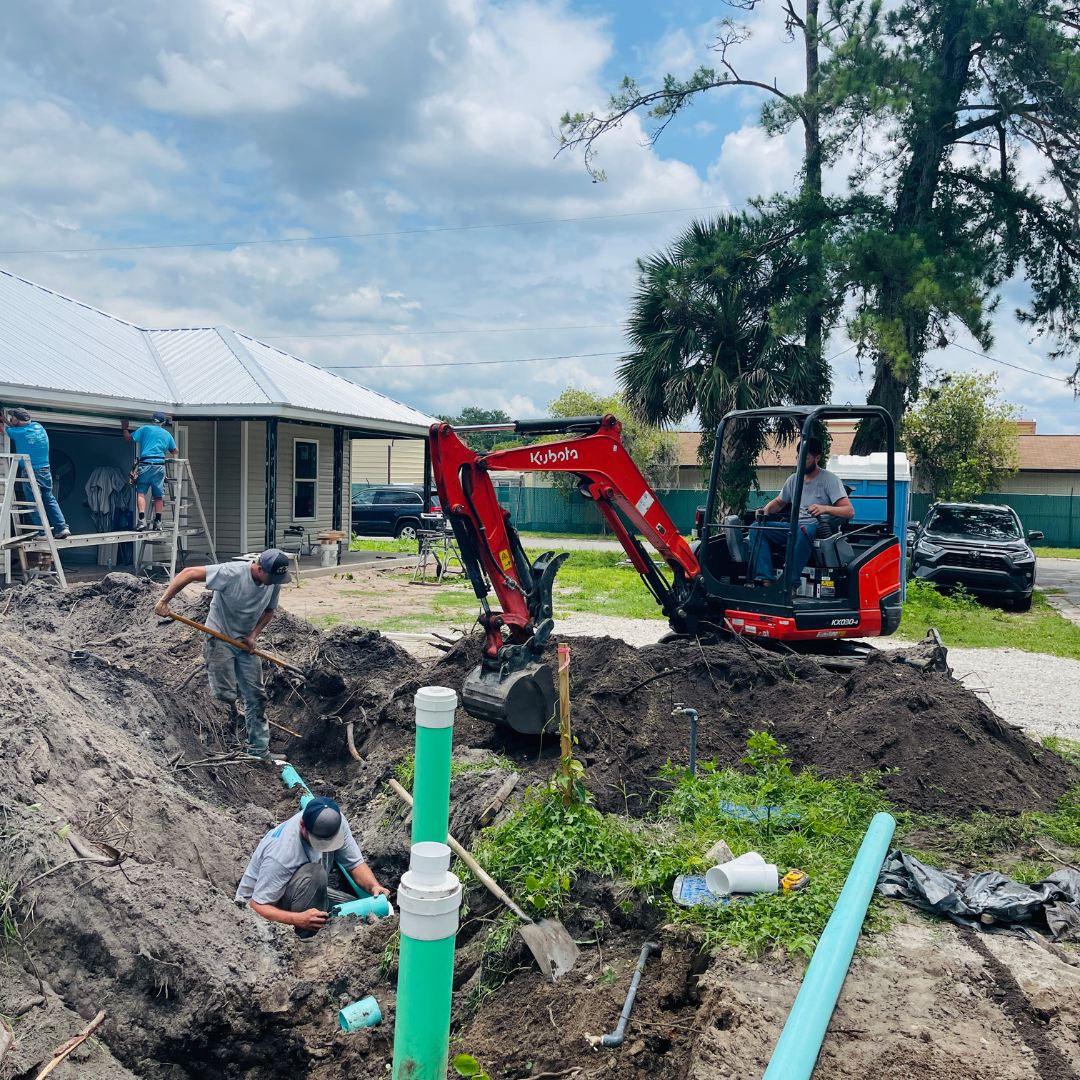
How Long Do Sewer Lines Last?
This is one of the most common questions we hear from Melrose homeowners, and the honest answer is that it depends heavily on the material and the conditions the pipe has been exposed to over the years.
- Cast iron pipes generally last several decades but are prone to corrosion and rust over time, particularly in older homes.
- Clay pipes, common in many older properties, can last a long time structurally but are vulnerable to root intrusion and cracking.
- PVC pipes, used widely in newer construction, tend to offer a longer, more corrosion-resistant lifespan compared to older materials.
- Orangeburg pipe, a material used in some mid-century homes, tends to fail earlier and is often a priority for replacement when discovered.
Beyond material, factors like tree root growth, soil movement, ground water levels, and the original installation quality all affect how long a sewer line will realistically hold up. This is part of why we take diagnosis seriously rather than assuming every line will behave the same way. When a repair or replacement is genuinely due, we walk homeowners through what we’re seeing and why, so the recommendation makes sense rather than feeling like an upsell.
Pipe Lining vs Pipe Bursting: What’s the Difference?
Once a damaged section of sewer line is confirmed, homeowners often have options beyond traditional dig-and-replace methods. Two of the most common trenchless approaches are pipe lining and pipe bursting, and understanding the difference helps set realistic expectations for the project.
Pipe lining, also known as cured-in-place pipe (CIPP) lining, involves inserting a flexible liner coated in resin into the existing damaged pipe. Once in place, the liner is cured, forming a new, smooth pipe within the old one. This method works well for pipes that are cracked, corroded, or have minor root intrusion, but still have their original shape largely intact.
Pipe bursting, on the other hand, is used when the existing pipe is too damaged, collapsed, or undersized to simply line. A bursting head is pulled through the old pipe, breaking it apart while simultaneously pulling a new pipe into place behind it. This approach can also allow for an upgrade in pipe diameter or material where needed.
The right method depends on the pipe’s condition, the extent of the damage, and the layout of the property. Our team evaluates each of these factors after a camera inspection, then explains which approach fits the situation and why, so homeowners understand the reasoning behind the recommendation rather than just the outcome.
How Do You Know If Your Sewer Line Has Collapsed?
A collapsed sewer line is a more serious situation than a typical clog or crack, and it usually presents with a distinct combination of symptoms:
- Complete or near-complete blockage. Water and waste have nowhere to go, leading to repeated backups regardless of how often the line is cleared.
- Multiple fixtures backing up simultaneously. Because a collapse blocks the main line, the effects show up throughout the home rather than in a single isolated drain.
- Sudden depressions or sinkholes in the yard. As the pipe fails structurally, soil above it can lose support and sink, sometimes creating a visible dip or hole along the pipe’s route.
- Video inspection confirmation. In many cases, a collapse isn’t fully confirmed until a camera is run through the line, revealing a section where the pipe has caved in or separated entirely.
A collapsed line typically requires excavation or pipe bursting rather than lining, since there’s no intact structure left to line. If you’re seeing several of these signs together, it’s worth having a professional assess the line before the situation worsens further.
Why Melrose Homeowners Trust Crown Plumbing and Septic for Sewer Line Repair
Crown Plumbing and Septic is a family company, built on a plumbing tradition that goes back generations. That background shapes how we approach every sewer line repair in Melrose, FL:
- We communicate clearly. Before any work begins, we walk homeowners through what our inspection found and what the repair will involve.
- We recommend long-term solutions. If a quick fix is likely to fail again in a year, we’ll tell you, even if it means a more involved conversation upfront.
- We stand behind our work. If something isn’t right after we leave, we make it a priority to come back and make it right.
- We treat every customer like a relationship, not a transaction. Many of our customers have worked with us repeatedly over the years, and that trust is something we take seriously.
Sewer line issues often overlap with septic system concerns, particularly on Melrose properties that rely on a septic system rather than municipal sewer service. If you’re unsure whether your issue is related to your sewer line, your septic system, or both, our team can help you sort that out. Learn more about our septic system services or general plumbing services.
Our Sewer Line Repair Process
When you call Crown Plumbing and Septic for a sewer line concern, here’s what to expect:
- Initial assessment. We start by discussing the symptoms you’ve noticed and reviewing the layout of your property.
- Camera inspection. In most cases, a sewer video inspection gives us the clearest, most accurate picture of what’s happening inside the line, without unnecessary guesswork or excavation.
- Clear explanation of findings. We explain what the camera revealed in plain language, including where the damage is and how severe it appears to be.
- Recommended repair approach. Depending on the pipe’s condition, we’ll recommend lining, bursting, or, in cases where the existing line is beyond repair, full sewer line installation.
- Efficient, professional execution. Our team completes the work with the same respect for your property and your time that has built our reputation across Melrose.
If a full replacement is the right path forward, our sewer line installation team can walk you through what that process looks like from start to finish.
Frequently Asked Questions
How can I tell if a sewer smell is coming from my sewer line or my septic system?
A licensed technician can often narrow this down through inspection and, when needed, a sewer video inspection to trace the source of the odor along the line itself.
Do tree roots really cause sewer line damage?
Yes. Roots are naturally drawn to the moisture inside sewer pipes and can infiltrate small cracks or joints, especially in older clay or cast iron lines, eventually causing blockages or structural damage.
Is trenchless repair always possible?
Not always. Trenchless methods like lining and bursting work well in many situations, but severely collapsed or misaligned pipes sometimes require traditional excavation to repair correctly.
Will my yard be torn up during a sewer line repair?
It depends on the method used. Trenchless approaches like pipe lining and pipe bursting are designed to minimize digging compared to traditional replacement, though some access points are usually still needed.
How often should older homes have their sewer lines inspected?
There’s no universal rule, but homes with older cast iron, clay, or Orangeburg pipe, or a history of recurring backups, generally benefit from periodic camera inspections to catch problems early.
Schedule Your Sewer Line Inspection in Melrose, FL
If you’ve noticed slow drains, unpleasant odors, or unusual changes in your yard, don’t wait for the problem to turn into a full backup or collapsed line. The team at Crown Plumbing and Septic is ready to inspect your sewer line, explain exactly what we find, and recommend a solution built to last, not just a temporary patch.
Contact Crown Plumbing and Septic today to schedule your sewer line inspection and take the first step toward a long-term solution for your Melrose home.