Get Hero Discounts on Plumbing Services
Septic System Installation in Melrose, FL: What Property Owners Need to Know
Whether you are building a new home, replacing a failing system, or developing a property that has never had septic service before, septic system installation is not a project to approach with guesswork. The size of the tank, the condition of the soil, and the layout of the drain field all affect how well the system performs for years to come. At Crown Plumbing and Septic, we handle septic system installation in Melrose, FL, with the same multigenerational plumbing knowledge and attention to detail we bring to every job.
Proper septic system installation depends on several factors working together correctly, including tank size matched to household needs, appropriate burial depth, suitable soil conditions for drainage, and a drain field designed to handle your property’s specific wastewater volume. Getting these details right from the start is what determines whether a system performs reliably for decades or requires premature repairs.
Below, we walk through what goes into sizing and planning a septic installation, how soil and depth requirements affect the process, and the signs that suggest a property may need upgrades before installation can move forward.
Why Melrose, FL Property Owners Trust Crown Plumbing and Septic for Septic System Installation
Crown Plumbing and Septic is a family-owned and family-operated company built on a multigenerational plumbing tradition. That background shapes how we approach every septic installation: we take the time to properly evaluate your property’s specific conditions, rather than applying a generic approach that may not hold up over the long term.
Our approach to septic system installation is guided by a few core principles:
- Showing up on schedule and communicating clearly throughout the installation process
- Evaluating your property’s soil conditions, household needs, and site layout before recommending a system design
- Installing to code and long-term performance standards, not shortcuts that could fail prematurely
- Standing behind our work and addressing any concerns that arise after installation
If your project involves broader plumbing work alongside the septic installation, our plumbing services team can coordinate the full scope.
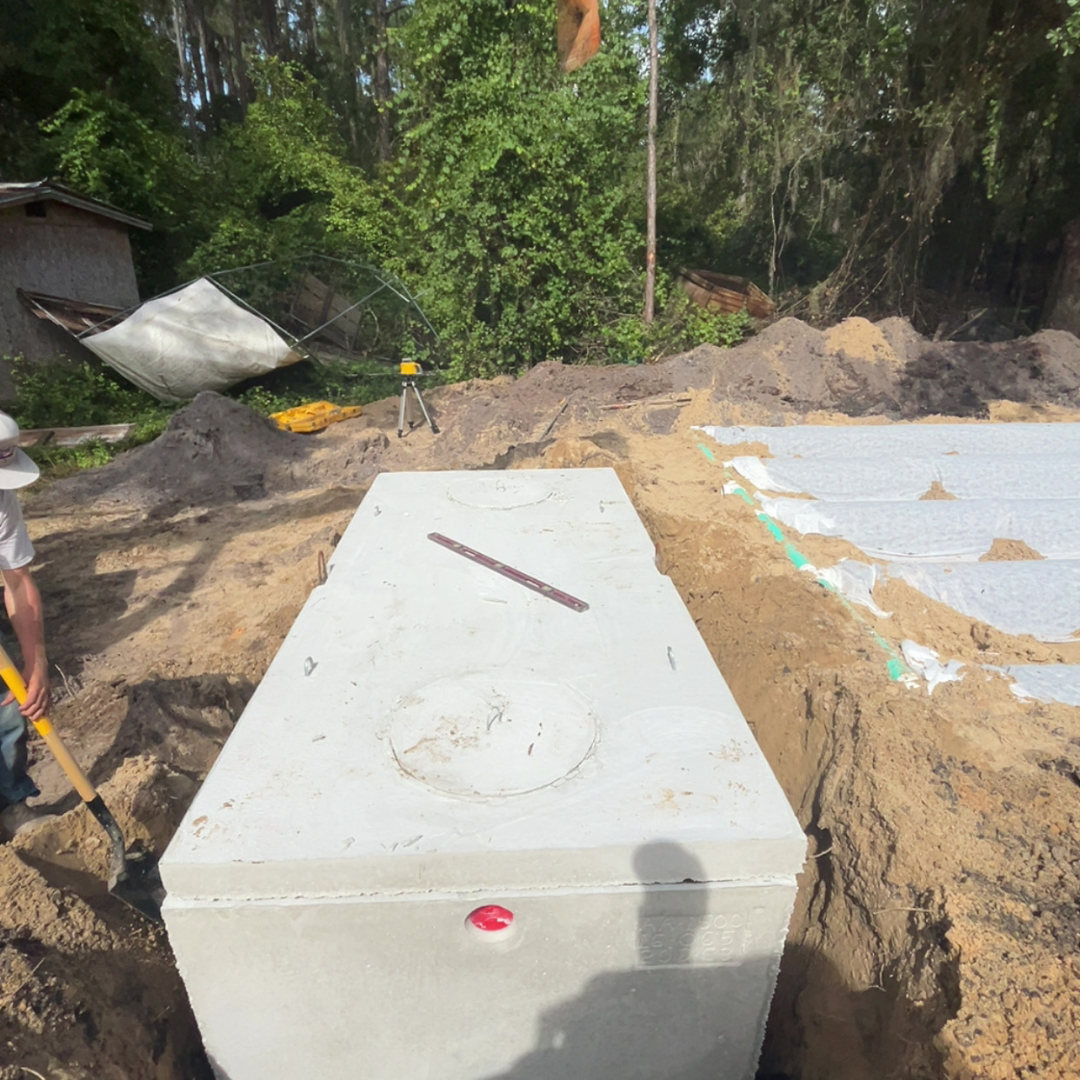
What Size Septic Tank Do I Need for My House?
Proper tank sizing is one of the most important factors in a successful septic system installation, since an undersized tank can lead to premature system strain and more frequent maintenance needs.
Factors that determine appropriate septic tank size include:
- Number of bedrooms – Tank sizing is typically based on the number of bedrooms in a home, since this serves as a general indicator of expected household occupancy and wastewater generation.
- Household size and water usage habits – Households with higher daily water usage, whether from larger families or heavier use of water-related appliances, may require additional capacity beyond baseline bedroom-based sizing.
- Local code requirements – Florida’s health and environmental regulations establish minimum tank size requirements based on these factors, which any proper installation must meet.
- Future household changes – If there is a reasonable expectation of future additions to the home or household size, this is worth discussing during the planning phase, since a septic system is a long-term investment.
Because sizing depends on several factors specific to your property and household, a proper evaluation during the planning phase is essential to determine the appropriate tank size for your situation, rather than relying on a general assumption.
How Deep Does a Septic Tank Need to Be Buried?
Burial depth is another important consideration in septic system installation, and it depends on several site-specific factors rather than a single fixed number.
Factors that influence proper burial depth include:
- Local soil conditions – The composition and drainage characteristics of the soil affect how the system is designed and positioned.
- Groundwater table level – In areas with a higher water table, burial depth and system design need to account for maintaining appropriate separation to ensure proper function and code compliance.
- Site grading and drainage – The natural slope and drainage patterns of the property influence how the system is laid out and positioned.
- Local code requirements – Florida’s health department regulations establish specific standards for depth and clearance that any installation must meet.
- Tank type and design – Different tank materials and designs may have somewhat different depth requirements based on manufacturer specifications.
Because proper depth depends on a combination of soil conditions, water table considerations, and code requirements specific to your property, a professional site evaluation is necessary to determine the correct approach rather than applying a generic standard.
Can a Septic System Be Installed on Any Type of Soil?
Not every soil type is suitable for a standard septic system without additional consideration, which is why soil evaluation is a critical early step in the installation process.
Key soil considerations for septic system installation:
- Drainage capability – Soil needs to allow adequate drainage for the drain field to function properly. Soil that drains too slowly can lead to system failure, while soil that drains too quickly may not adequately filter wastewater before it reaches groundwater.
- Soil composition – Sandy soils, clay-heavy soils, and mixed compositions all behave differently when it comes to septic system performance, and each requires a tailored approach.
- Percolation testing – Before installation, percolation testing evaluates how quickly water moves through the soil at a specific site, which directly informs system design.
- Site-specific challenges – Properties with unusually dense clay soil, high water tables, or limited usable space may require alternative septic system designs rather than a standard conventional system.
When soil conditions are less than ideal for a standard system, alternative solutions, such as engineered drain fields or advanced treatment systems, can often make installation possible where it might not otherwise be straightforward. A proper site evaluation identifies these considerations early, before installation begins, rather than discovering complications partway through the project.
What Are Signs That a Property Needs a Septic System Upgrade Before Installation?
In some cases, particularly with existing properties, certain conditions signal that additional work may be needed before a new septic system installation can move forward successfully.
Signs that may indicate a property needs upgrades before installation include:
- Poor natural drainage across the property – If the site already shows signs of standing water or poor drainage, this needs to be addressed as part of the overall septic system planning.
- Limited usable space for a standard drain field – Smaller lots or properties with significant existing structures may require an alternative system design to fit the available space.
- Proximity to wells, water bodies, or property lines – Regulatory setback requirements may necessitate site modifications or alternative system placement.
- Existing grading issues – Improper site grading can affect both installation and long-term system performance, sometimes requiring correction before installation begins.
- High water table conditions – Properties with a naturally high water table may require specialized system designs, such as raised or mound systems, to meet code requirements and function properly.
- Evidence of previous septic system failure – If a property previously had a failing system, understanding what caused that failure is important before proceeding with new installation, to avoid repeating the same issue.
Identifying these factors during the planning and site evaluation phase helps ensure the new installation is designed correctly from the outset, rather than encountering problems after the system is already in place.
What the Septic System Installation Process Involves
While every property is different, a proper septic system installation generally includes the following steps:
- Site evaluation, including soil testing and assessment of property conditions
- System design based on household size, soil conditions, and local code requirements
- Permitting through the appropriate local health department or regulatory authority
- Excavation and tank placement at the appropriate depth and location
- Drain field installation, sized and positioned according to the site evaluation
- Connection to the home’s plumbing system
- Final inspection and system testing to confirm proper function
Supporting Your Septic System After Installation
A properly installed septic system still requires ongoing care to continue performing well. Our septic tank pumping service helps maintain your system over time, while our septic system repair team is available if issues arise down the road. For properties with a lift station as part of their septic or wastewater system, our lift station maintenance service helps keep that equipment functioning reliably. For a broader look at everything we offer for septic systems, visit our septic system services page.
Frequently Asked Questions About Septic System Installation
How long does septic system installation typically take?
Timelines vary depending on site conditions, permitting requirements, and system complexity, but most installations can be completed within a defined project window once permitting and planning are finalized.
Do I need a permit for septic system installation?
Yes, septic system installation in Florida requires permitting through the appropriate local health department, and our team handles this process as part of the project.
Can a septic system be installed on a property with an existing well?
This depends on the specific setback distances required between the septic system and the well, which are established by local regulations. Site evaluation determines whether standard placement is feasible or whether adjustments are needed.
What happens if soil testing reveals poor drainage on my property?
This does not necessarily mean installation is impossible. Alternative system designs, such as engineered or advanced treatment systems, are often available to address challenging soil conditions.
Is a new septic system installation different for new construction versus replacing an existing system?
The general process is similar, though replacement projects also involve removing or properly decommissioning the old system, and may need to account for existing site conditions shaped by the prior installation.
Schedule Your Septic System Installation in Melrose, FL Today
A septic system installation is a significant, long-term investment in your property, and getting the details right from the beginning makes all the difference in how the system performs for years to come. Crown Plumbing and Septic is ready to evaluate your property, design a system suited to your specific conditions, and install it correctly the first time.
As a family-owned company, we treat every installation the way we would want it handled on our own property: with honest guidance, careful planning, and workmanship built to last. Reach out to our team today to schedule your septic system installation and start your project with a solid, properly designed foundation.
Contact Crown Plumbing and Septic or call 352-246-6476 to schedule your septic system installation in Melrose, FL.