Get Hero Discounts on Plumbing Services
Water Heater Installation in Melrose, FL: What to Know Before You Upgrade
Choosing a new water heater is not something most homeowners think about often, which is exactly why it can feel overwhelming when the time finally comes. Between tank sizes, tankless options, venting requirements, and placement questions, it is easy to end up with more uncertainty than answers. At Crown Plumbing and Septic, we handle water heater installation in Melrose, FL with the same approach we bring to every job: honest guidance, careful planning, and workmanship built to last well beyond the first year.
A proper water heater installation depends on choosing the right unit type and size for your household, ensuring the space meets code and safety requirements, and confirming existing gas, electrical, and venting connections can support the new unit. Working with an experienced local installer helps avoid costly missteps that can shorten a new unit’s lifespan or create safety concerns.
Below, we walk through the most common questions homeowners ask before installing a new water heater, including tank versus tankless considerations, placement options, and what a professional installation actually involves.
Why Melrose, FL Homeowners Choose Crown Plumbing and Septic for Water Heater Installation
Crown Plumbing and Septic is a family-owned and family-operated company built on a multigenerational plumbing tradition. That background shows up in how we approach every installation: we do not just set a new unit in place and leave. We evaluate your home’s specific setup, walk you through your options honestly, and install the unit to hold up for years to come.
Our installation process is guided by a few consistent principles:
- Showing up on schedule and communicating clearly at every step
- Evaluating your household’s hot water needs before recommending a unit
- Installing to code and manufacturer specifications, not shortcuts
- Standing behind the work and making it right if something is not to your satisfaction
If your installation is part of a larger plumbing project, our plumbing services team can coordinate the full scope of work.
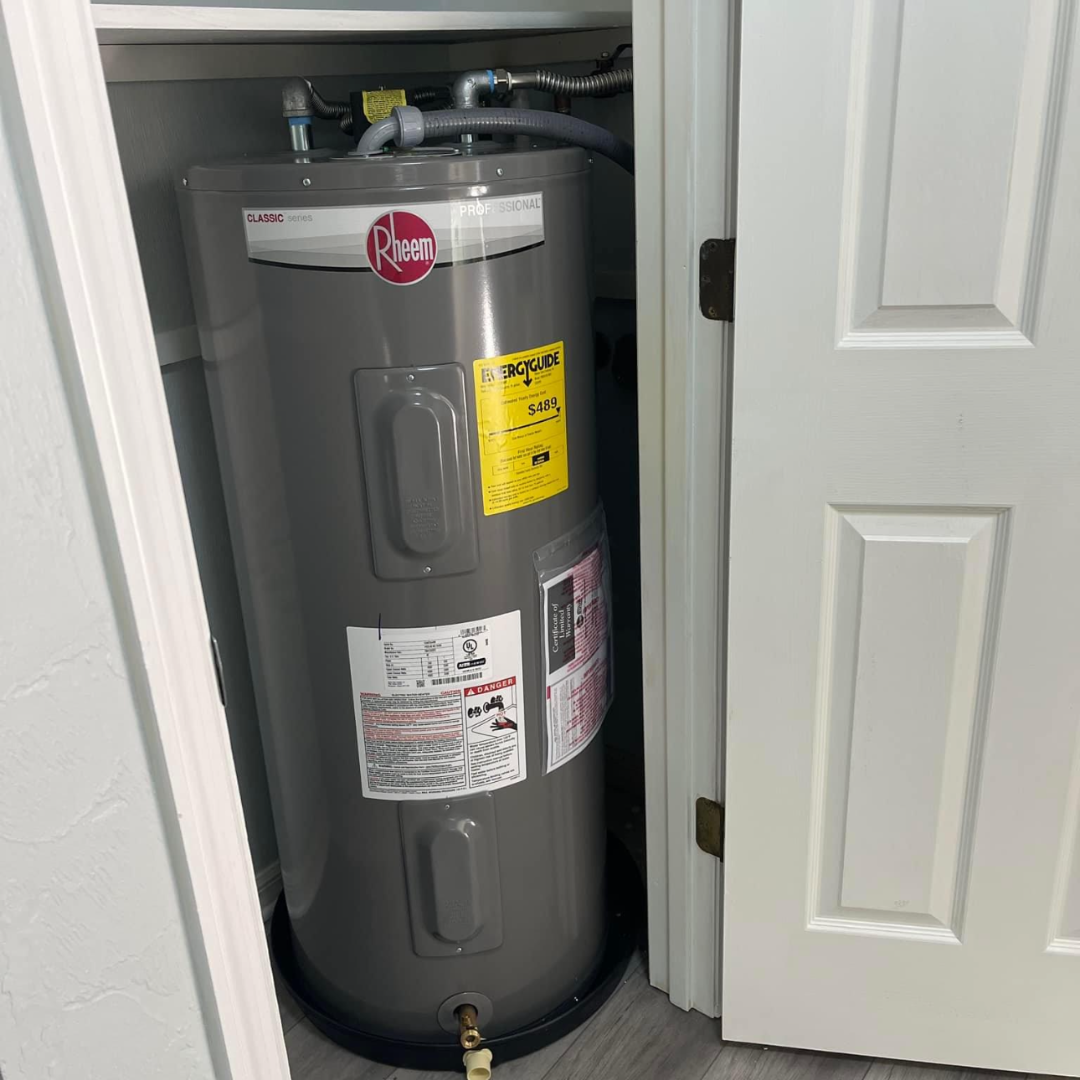
Tankless vs. Traditional Tank Water Heater: Which Is Better?
This is one of the most common questions we hear from homeowners planning a new installation, and the honest answer is that “better” depends on your household’s needs.
Traditional tank water heaters:
- Store and continuously heat a set volume of water, typically between 30 and 80 gallons
- Tend to have a more straightforward installation process, especially when replacing an existing tank unit
- Can run short on hot water during high-demand periods, such as back-to-back showers or laundry combined with dishwashing
- Generally have a service life of 8 to 12 years
Tankless water heaters:
- Heat water on demand rather than storing it, which can reduce standby energy loss
- Take up significantly less physical space, which can be useful in smaller utility areas
- Provide a continuous hot water supply without running out during heavy use
- Often last longer than tank units when properly maintained
- May require modifications to gas lines, electrical service, or venting depending on the home’s existing setup
Neither option is automatically the right choice for every household. Factors like your family size, daily hot water usage, available space, and existing utility connections all play a role. We walk through these details with you before recommending a direction, because the goal is a system that fits your home, not just the easiest option to install.
Can You Install a Water Heater in an Attic or Closet?
Yes, water heaters can often be installed in attics and closets, and both locations are common in Florida homes where floor space is at a premium. That said, each location comes with specific requirements that need to be addressed properly.
Attic installations typically require:
- A properly sized and secured platform to support the unit’s weight
- Adequate access for future maintenance and potential repairs
- A drain pan connected to a proper drain line, given the risk of water damage to ceilings and structures below
- Sufficient clearance and ventilation, particularly for gas units
Closet installations typically require:
- Adequate clearance around the unit for safe operation and service access
- Proper venting for gas units, following manufacturer and code specifications
- A drain pan in most cases, especially in closets located near living spaces or upper floors
- Confirmation that the closet meets minimum space requirements for the specific unit type
Both locations can work well when installed correctly, but they are not universally interchangeable. The right choice depends on your home’s layout, the type of unit you are installing, and local code requirements.
Do You Need a Drain Pan for a Water Heater Installation?
In most residential installations, yes, a drain pan is required or strongly recommended, particularly for installations located in attics, above living spaces, or in areas where a leak could cause significant water damage.
A drain pan serves a simple but important purpose: if the tank develops a leak or fails, the pan captures the water and directs it to a drain line instead of allowing it to spread across floors, ceilings, or walls below. This is especially important for:
- Attic installations, where undetected leaks can cause extensive hidden damage
- Installations above finished living space
- Homes where the water heater is located in a closet near bedrooms or main living areas
Even in ground-level installations like garages, a drain pan is often still required by local code and is generally good practice regardless. Our team will confirm what is required for your specific installation location before the work begins.
Can an Old Water Heater Be Upgraded to Tankless Without Major Changes?
Sometimes, but not always. Converting from a traditional tank unit to a tankless system is more involved than a simple swap in most homes, and it is worth understanding what is typically required before assuming the switch will be straightforward.
Common considerations when upgrading to tankless include:
- Gas line sizing – Tankless units often require a larger gas line than what feeds a standard tank, since they heat water on demand and draw more gas flow during operation.
- Venting requirements – Tankless units typically use different venting than tank units, which may require new venting to be installed.
- Electrical requirements – Electric tankless units can require significant electrical capacity, which may mean panel upgrades in some homes.
- Space and mounting – While tankless units take up less floor space, they still need proper wall mounting and clearance.
In some homes, the existing infrastructure is close enough that the conversion is relatively manageable. In others, the gas, venting, or electrical work needed to support a tankless unit is significant enough that it changes the overall scope of the project. We evaluate your home’s existing setup honestly before recommending tankless, so you know what the installation actually involves before committing to it.
What a Professional Water Heater Installation Includes
A proper installation goes well beyond simply connecting a new unit. Our process typically includes:
- Evaluating your household’s hot water demand and recommending an appropriately sized unit
- Reviewing existing gas, electrical, and venting connections to confirm compatibility
- Removing and properly disposing of the old unit
- Installing the new water heater to manufacturer and code specifications
- Confirming proper venting, drain pan placement, and shut-off valve function
- Testing the completed installation for leaks, proper heating, and safe operation
- Walking you through basic maintenance to help extend the life of your new unit
This is also a good opportunity to consider whether a water heater replacement makes more sense than repairing an aging unit, particularly if your current system is showing signs of wear. If you are still weighing your options, our water heater services in Melrose, FL page outlines how repair, installation, and replacement fit together depending on your situation, and our water heater repair team is available if your existing unit needs attention before a decision is made.
Frequently Asked Questions About Water Heater Installation
How long does a typical water heater installation take?
Many standard installations can be completed in a single visit, though the timeline can vary depending on the unit type, placement, and whether any gas, electrical, or venting modifications are needed.
Do I need a permit for a water heater installation?
In most cases, yes. Local code typically requires a permit for water heater installation, and our team handles this process as part of the job.
Can I install a water heater myself?
Water heater installation involves gas, electrical, and plumbing connections that carry real safety risks if done incorrectly. Professional installation helps ensure the unit is set up safely, meets code, and performs reliably.
What size water heater do I need?
Sizing depends on household size, number of bathrooms, and typical hot water usage patterns. Our team evaluates these factors before recommending a specific unit.
Is tankless installation more complicated than tank installation?
It can be, particularly if your home’s existing gas line, venting, or electrical service needs to be upgraded to support the new unit. We assess this upfront so you know what to expect.
Schedule Your Water Heater Installation in Melrose, FL Today
A new water heater is a significant decision, and getting the installation right the first time makes a real difference in how long the unit lasts and how well it performs. Whether you are replacing an aging tank, considering a switch to tankless, or installing a unit in a new construction project, Crown Plumbing and Septic is ready to help you make an informed decision and complete the job correctly.
As a family-owned company, we treat every installation the way we would want it handled in our own home: with honest guidance, careful attention to detail, and workmanship that holds up over the long term. Reach out to our team today to schedule your water heater installation and start with a system built to serve your household reliably for years to come.
Contact Crown Plumbing and Septic or call 352-246-6476 to schedule your water heater installation in Melrose, FL.