Get Hero Discounts on Plumbing Services
Tankless Water Heater Installation in Melrose, FL: What Homeowners Should Know First
Running out of hot water in the middle of a shower, or watching a bulky tank take up half a utility closet, is enough to make any homeowner start researching alternatives. Tankless water heaters have become a popular answer to both problems, but switching to one is not always as simple as swapping out an old unit for a new one. At Crown Plumbing and Septic, we provide tankless water heater installation in Melrose, FL, guided by an honest evaluation of your home’s setup and what will actually serve your household well over the long term.
Tankless water heater installation typically requires evaluating your home’s existing gas line size, electrical capacity, and venting before the new unit goes in, since tankless systems have different infrastructure needs than traditional tank units. When installed correctly, a tankless system can provide continuous hot water and take up significantly less space, but the installation itself is more involved than a simple tank swap.
Below, we address the most common questions Melrose homeowners ask before making the switch, including venting requirements, whether the upgrade is worth it, and what to do if a tankless unit is not performing as expected.
Why Trust Crown Plumbing and Septic With Your Tankless Water Heater Installation in Melrose, FL
Crown Plumbing and Septic is a family-owned and family-operated company built on a multigenerational plumbing tradition. That background matters when it comes to tankless installation specifically, because these systems require more careful evaluation of a home’s existing infrastructure than a standard tank replacement.
Our approach to tankless installation is guided by the same principles we apply to every job:
- Showing up on schedule and communicating clearly throughout the process
- Evaluating your home’s gas, electrical, and venting setup honestly before recommending tankless
- Installing to manufacturer and code specifications, not shortcuts that can cause performance issues later
- Standing behind our work and returning to make it right if something is not to your satisfaction
If your project involves broader plumbing work alongside the water heater upgrade, our plumbing services team can handle the full scope.
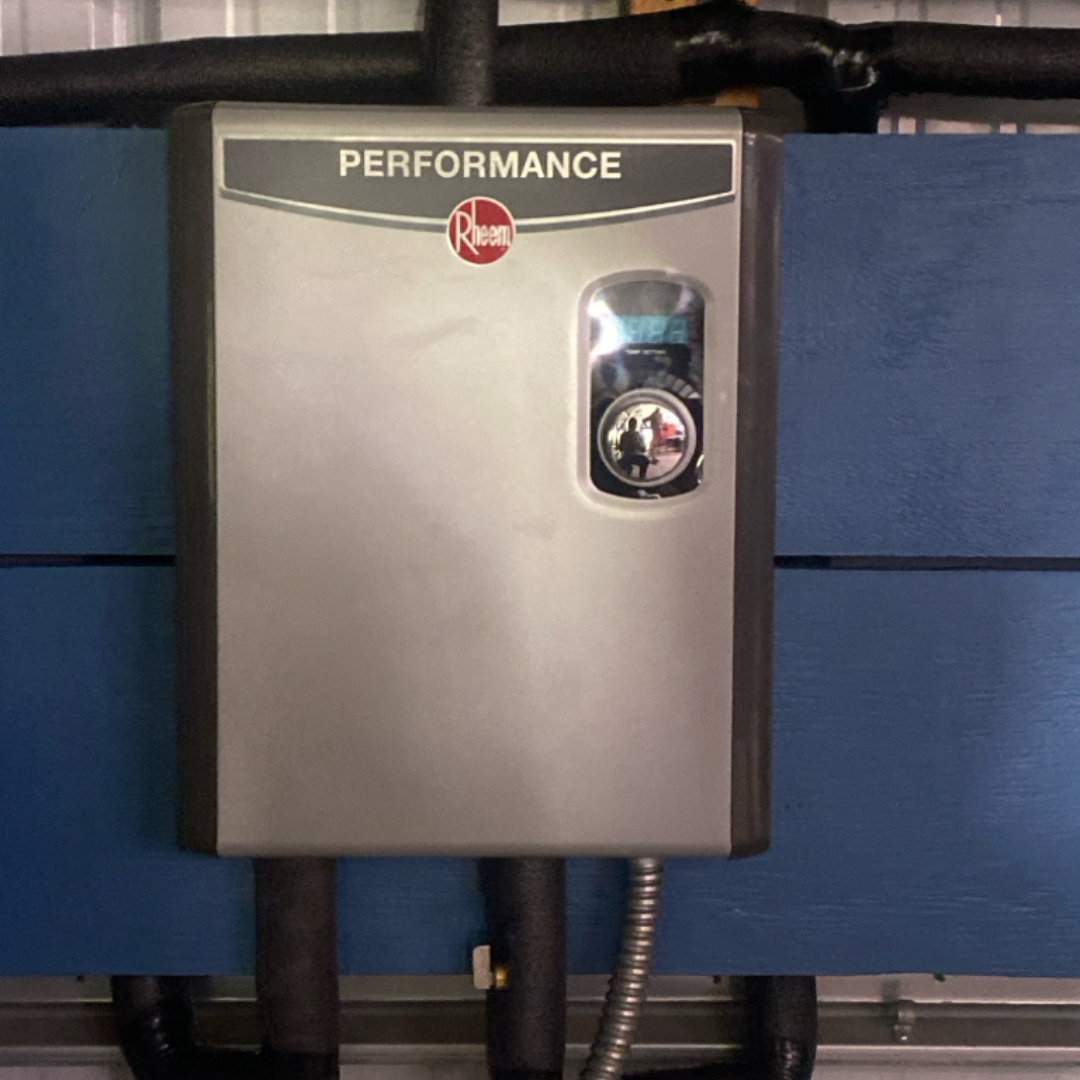
Is It Worth Switching to a Tankless Water Heater?
This is one of the first questions most homeowners ask, and the honest answer depends on your household’s specific needs rather than a one-size-fits-all recommendation.
Reasons homeowners often find tankless worth the switch:
- Continuous hot water – Tankless units heat water on demand, so they are not limited by a fixed storage capacity. This is especially valuable for larger households or homes where multiple hot water demands overlap.
- Space savings – Tankless units are wall-mounted and take up a fraction of the space of a traditional tank, which can free up valuable closet or garage space.
- Longer typical lifespan – When properly maintained, tankless units often last longer than traditional tank water heaters.
- Reduced standby energy loss – Because tankless systems do not continuously heat and reheat a stored volume of water, they can operate more efficiently in many households.
Reasons the switch may be less straightforward:
- Infrastructure requirements – Depending on your home’s existing gas line size, electrical capacity, and venting, upgrading to tankless may involve more work than expected.
- Flow rate limitations – Tankless units have a maximum flow rate, so very high simultaneous demand across multiple fixtures can still be a consideration in larger homes.
- Installation complexity – The upgrade process is more involved than a like-for-like tank replacement.
We walk through these factors honestly with every customer considering the switch, because the goal is a system that genuinely fits your household, not simply the newest option available.
Do Tankless Water Heaters Need Special Venting?
Yes, in most cases. Tankless water heaters, particularly gas-powered units, generally require different venting than traditional tank water heaters, and this is one of the most important factors in planning an installation.
Key venting considerations include:
- Venting material – Many tankless units require specific venting materials rated for the higher exhaust temperatures or condensation levels these systems produce, depending on whether the unit is condensing or non-condensing.
- Vent routing – Tankless units are often installed in different locations than a traditional tank, which can mean new vent routing through walls or rooflines.
- Vent sizing – Proper vent diameter and length must match manufacturer specifications to ensure safe and efficient operation.
- Electric tankless exceptions – Electric tankless units do not require venting in the same way gas units do, though they come with their own electrical requirements.
Because venting directly affects both safety and performance, this is not an area where shortcuts make sense. Confirming the correct venting approach for your specific unit and installation location is a core part of doing the job right.
Can I Install a Tankless Water Heater Myself?
While some homeowners are comfortable with general DIY projects, tankless water heater installation is generally not recommended as a do-it-yourself undertaking, for a few important reasons.
Why professional installation matters for tankless systems:
- Gas line sizing – Tankless units often require a larger gas line than what feeds a standard tank, and undersized gas lines can lead to performance issues or safety concerns.
- Venting requirements – Incorrect venting can create serious safety hazards, particularly with gas-powered units.
- Electrical requirements – Some tankless units, especially electric models, require substantial electrical capacity that may involve panel work.
- Permitting and code compliance – Most jurisdictions require a permit for water heater installation, and improperly permitted or installed systems can create issues when selling a home or filing an insurance claim.
- Manufacturer warranty requirements – Many manufacturers require professional installation to keep the unit’s warranty valid.
A professional installation ensures these details are addressed correctly the first time, rather than discovering a problem after the unit is already in place.
Why Is My Tankless Water Heater Not Providing Enough Hot Water?
If you already have a tankless system and are noticing inconsistent or insufficient hot water, a few common issues are usually to blame.
Common causes include:
- Undersized unit for household demand – If the tankless unit’s flow rate was not matched correctly to your household’s typical simultaneous hot water usage, it can struggle during high-demand periods.
- Mineral or sediment buildup – Over time, mineral deposits can build up inside the unit’s heat exchanger, particularly in areas with hard water, reducing efficiency and output.
- Cold water sandwich effect – This is a brief burst of cold water between hot water uses, which is a known characteristic of some tankless systems rather than necessarily a malfunction.
- Incoming water temperature – In colder months, tankless units have to work harder to raise incoming water to the target temperature, which can reduce maximum flow output.
- Component wear or failure – Like any mechanical system, internal components can wear out over time and affect performance.
If you are experiencing ongoing issues with your tankless unit, a professional inspection can identify the specific cause rather than leaving you guessing. Our tankless water heater repair team is available to diagnose and address these issues directly.
What a Professional Tankless Installation Involves
A proper tankless installation includes more steps than simply mounting the new unit. Our process typically covers:
- Evaluating your household’s hot water demand and recommending an appropriately sized unit
- Assessing existing gas line capacity, electrical service, and venting to determine what modifications are needed
- Removing and properly disposing of the old unit, if applicable
- Installing the new tankless unit to manufacturer and code specifications
- Confirming proper venting, gas or electrical connections, and mounting
- Testing the completed system for leaks, proper heating output, and safe operation
- Reviewing basic maintenance steps to help extend the unit’s lifespan
If you are still deciding between installation options, our water heater installation page covers both tank and tankless considerations in more depth, and our water heater replacement page can help if you are weighing whether to replace an aging unit with a new tank or tankless system.
Frequently Asked Questions About Tankless Water Heater Installation
How long does a tankless water heater installation take?
Timing depends on whether your home’s existing gas, electrical, or venting infrastructure needs modification. Straightforward installations can often be completed in a day, while more involved conversions may take longer.
Do tankless water heaters require more maintenance than tank units?
Tankless units generally benefit from periodic descaling or flushing, particularly in areas with hard water, to prevent mineral buildup inside the heat exchanger.
Will a tankless water heater work with my existing gas line?
This depends on your current gas line size and the specific unit’s requirements. Many homes need a larger gas line to properly support a tankless system, which our team evaluates during the assessment.
Can a tankless water heater be installed outdoors?
In many cases, yes, and outdoor installation can simplify venting requirements for gas units. Whether this is the right option depends on your specific home and local code requirements.
How do I know if tankless is the right choice for my household?
This depends on your household size, hot water usage patterns, and the condition of your home’s existing infrastructure. We evaluate these factors honestly and let you know what fits before recommending a direction.
Schedule Your Tankless Water Heater Installation in Melrose, FL Today
Switching to a tankless water heater can be a smart long-term decision, but only when it is evaluated and installed correctly for your specific home. Crown Plumbing and Septic is ready to walk you through your options honestly, assess what your home’s infrastructure can support, and complete the installation to a standard built to last.
As a family-owned company, we treat every installation the way we would want it handled in our own home: with clear communication, careful planning, and dependable workmanship. Reach out to our team today to schedule your tankless water heater installation and start enjoying reliable hot water without the bulk of a traditional tank.
Contact Crown Plumbing and Septic or call 352-246-6476 to schedule your tankless water heater installation in Melrose, FL.