Get Hero Discounts on Plumbing Services
Water Softener Installation in Melrose, FL: Solving Hard Water Problems for Good
Crusty white buildup on faucets, dull-looking laundry, and skin that feels dry no matter how much lotion you use are all common signs of hard water, and Melrose homeowners deal with this more often than many realize. At Crown Plumbing and Septic, we provide water softener installation in Melrose, FL, designed to address hard water at the source so you stop fighting its effects room by room.
A water softener works by removing calcium and magnesium minerals from your water supply through a process called ion exchange, which prevents the scale buildup, soap scum, and appliance strain that hard water causes. Installation typically takes place where the main water line enters the home, and with proper maintenance, a water softener can provide reliable results for years.
Below, we walk through how water softeners actually work, where they are typically installed, what ongoing maintenance looks like, and how to know whether your home would benefit from one.
Why Melrose, FL Homeowners Choose Crown Plumbing and Septic for Water Softener Installation
Crown Plumbing and Septic is a family-owned and family-operated company built on a multigenerational plumbing tradition. That background shapes how we approach every water softener installation: we evaluate your home’s actual water conditions, recommend a system sized appropriately for your household, and install it correctly the first time.
Our approach is guided by a few consistent principles:
- Showing up on schedule and communicating clearly throughout the process
- Evaluating your home’s specific water hardness before recommending a system
- Installing to manufacturer and code specifications, with attention to proper piping and placement
- Standing behind our work and returning to make it right if something is not performing as expected
If your installation is part of a broader plumbing or water treatment project, our plumbing services team can coordinate the full scope of work.
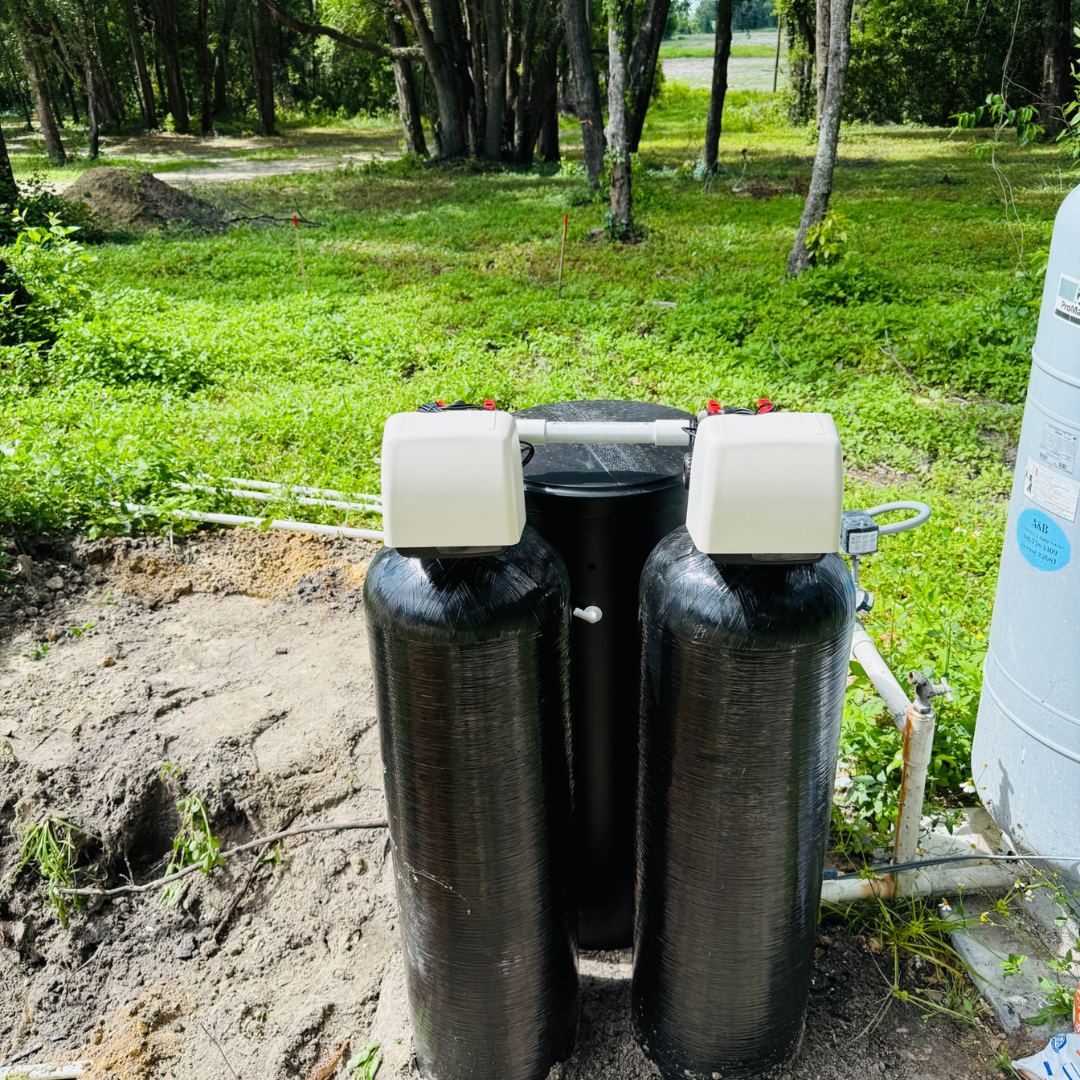
How Does a Water Softener Work?
Understanding the basic process behind water softening can help homeowners feel more confident about the investment and what to expect from the system.
A water softener works through a process called ion exchange:
- Hard water enters the system – Water from your main supply line flows into the softener’s mineral tank, which is filled with small resin beads.
- Resin beads attract calcium and magnesium – These beads are charged with sodium or potassium ions, which attract and hold onto the hardness minerals as water passes through, effectively swapping them out.
- Softened water continues through the home – Once the minerals have been removed, the softened water flows through your home’s plumbing system, reducing scale buildup and improving soap and detergent performance.
- The system regenerates periodically – Over time, the resin beads become saturated with collected minerals. The softener automatically flushes the tank with a brine solution, typically during a scheduled regeneration cycle, to recharge the resin beads and flush the collected minerals out of the system.
This cycle repeats continuously, providing a steady supply of softened water as long as the system is properly maintained.
Where Should a Water Softener Be Installed in a House?
Proper placement is an important part of getting the full benefit from a water softener, and this is a common question homeowners have before installation begins.
Key placement considerations include:
- Point of entry – Water softeners are typically installed where the main water line enters the home, before the water is distributed to individual fixtures. This ensures the entire home benefits from softened water, rather than just select faucets.
- Proximity to a drain – Because the regeneration process involves flushing collected minerals out of the system, the softener needs to be installed near a suitable drain connection.
- Accessible, protected location – Common installation locations include garages, basements, utility closets, or dedicated mechanical rooms, chosen for accessibility during maintenance and protection from extreme temperatures.
- Before the water heater – Softeners are generally installed before the water heater in the plumbing sequence, which helps protect the water heater itself from the mineral scale buildup that hard water can cause over time.
- Bypass for outdoor water use – In many installations, a bypass line is included so that outdoor water use, such as irrigation, does not run through the softener unnecessarily.
Because every home’s plumbing layout is different, a proper installation evaluates your specific setup to determine the most effective placement rather than defaulting to a generic approach.
What Maintenance Does a Water Softener Need After Installation?
A properly installed water softener is relatively low-maintenance, but a few ongoing tasks help ensure it continues performing effectively over its lifespan.
Routine maintenance typically includes:
- Salt replenishment – Most water softeners use salt or potassium pellets to regenerate the resin beads. Periodically checking and refilling the brine tank is one of the most important ongoing maintenance tasks.
- Monitoring for salt bridging – Occasionally, a hardened layer of salt can form in the brine tank, preventing proper dissolution. Periodic checks help catch this before it affects performance.
- Resin bed inspection – Over the life of the system, the resin beads can wear down and lose effectiveness, so periodic evaluation helps determine when replacement is needed.
- Checking regeneration cycles – Confirming the system is regenerating on an appropriate schedule helps ensure consistent softened water output.
- General system inspection – Periodic checks for leaks, proper valve function, and overall system performance help catch small issues before they become larger problems.
Following manufacturer guidance for your specific system, along with periodic professional evaluation, helps extend the life of the softener and ensures it continues delivering consistent results.
How Do I Know if I Need a Water Softener?
Hard water symptoms can be easy to dismiss individually, but together they often paint a clear picture of a household that would benefit from a water softener.
Common signs your home may need a water softener include:
- Visible mineral buildup – White, chalky scale on faucets, showerheads, and glassware is one of the most recognizable signs of hard water.
- Reduced soap and detergent effectiveness – Hard water minerals interfere with soap’s ability to lather, often resulting in a filmy residue on skin, dishes, and laundry.
- Dry skin and dull hair – Hard water can leave a mineral residue on skin and hair that makes both feel less clean, even after washing.
- Appliance strain – Water heaters, dishwashers, and washing machines can experience reduced efficiency and a shorter lifespan due to scale buildup from hard water.
- Spotted dishes and glassware – Mineral deposits often leave visible spots on dishes even after they come out of the dishwasher.
- Reduced water flow over time – Scale buildup inside pipes can gradually restrict water flow throughout the home.
If several of these signs sound familiar, a water hardness evaluation can confirm whether a softener would meaningfully improve your household’s water quality.
Water Softeners and Broader Water Treatment Needs
A water softener addresses hardness specifically, but it is not the only water quality consideration for Melrose homes. Depending on your water source, other contaminants or characteristics may also warrant attention. Our water treatment services take a broader look at your home’s overall water quality, while our whole house filters and reverse osmosis services address filtration needs beyond hardness alone. If you are still exploring your options, our water filter supplier page covers what to look for when choosing the right system and provider for your home.
What to Expect During Water Softener Installation
Our installation process typically includes:
- Evaluating your home’s water hardness and household usage to recommend an appropriately sized system
- Reviewing your plumbing layout to determine the best installation location
- Installing the softener at the point of entry, with proper connections to the main water line and drain
- Setting up the bypass line, if applicable, for outdoor water use
- Testing the system to confirm proper operation and regeneration cycling
- Walking you through basic maintenance so you can keep the system performing well over time
Frequently Asked Questions About Water Softener Installation
How long does water softener installation typically take?
Most installations can be completed in a single visit, though the exact timeline depends on your home’s existing plumbing layout and whether any additional piping adjustments are needed.
Will a water softener affect my drinking water taste?
Some households notice a slight taste difference due to the sodium or potassium used in the softening process, though this is generally mild. Pairing a softener with a reverse osmosis system at the kitchen tap is a common solution for households that prefer a different taste for drinking water.
Do water softeners use a lot of water during regeneration?
Regeneration cycles do use some water to flush the resin bed, though modern systems are generally designed to be efficient. Your specific usage will depend on the system and its settings.
Can a water softener be installed in any home?
Most homes can accommodate a water softener, though proper installation depends on having adequate space near the water’s point of entry and access to a suitable drain connection.
Is a water softener the same as a whole house filter?
No. A water softener specifically targets hardness minerals like calcium and magnesium, while whole house filters address a broader range of contaminants. Some households benefit from both working together.
Schedule Your Water Softener Installation in Melrose, FL Today
Hard water affects far more than just your faucets. It touches your appliances, your laundry, your skin, and your overall water quality throughout the home. Crown Plumbing and Septic is ready to evaluate your water, recommend a properly sized system, and install it correctly so you can start seeing the difference.
As a family-owned company, we treat every installation the way we would want it handled in our own home: with honest guidance, careful attention to detail, and workmanship built to last. Reach out to our team today to schedule your water softener installation and start enjoying the benefits of consistently softened water.
Contact Crown Plumbing and Septic or call 352-246-6476 to schedule your water softener installation in Melrose, FL.